
Nothing to see here? Try deadpan photography.
You take a walk every day. Sometimes to and from work. Sometimes for exercise. Or maybe to walk the dog.
Rain, hail or shine you’re out there and you always take your EDC camera with you – just in case.
I just threw in the acronym for Every Day Carry to try to make me look hip and cool and with it.
But you’ve walked the same route so many times before that what you see is boring. Maybe like the weather – dull and dreary. Maybe even raining. Lousy light. Nothing new to see. Nothing exciting to see. Nothing to photograph.
And in many respects that’s the point. Nothing new. Nothing exciting. Nothing to photograph.
This is exactly where and when the deadpan photography aesthetic comes into play.
If you’ve never heard of it, deadpan photography is about photographing the super-mundane. The dull stuff. The boring stuff. Stuff that is just THERE ! It just IS ! Stuff that people – you included – wouldn’t look twice at.
There are rules for deadpan photography. Well – not rules. Guidelines. Just as there are guidelines for all other genres of photography.
But the number one guideline for shooting deadpan is to take photos with a straight face. Sorry – that was meant to be a joke.
Deadpan photography is, in essence, about capturing photographs that do not evoke any emotion.
Deadpan photos should aim to not tell a story. Not make viewers happy, sad, or show any other emotion. Viewers should remain totally detached and unmoved by looking at your deadpan images.
I believe that is very hard to achieve. Look at this first example of my deadpan photography attempt. Your first reaction is probably something like “why did he take that”. That is a reaction. Not meant to happen in deadpan.
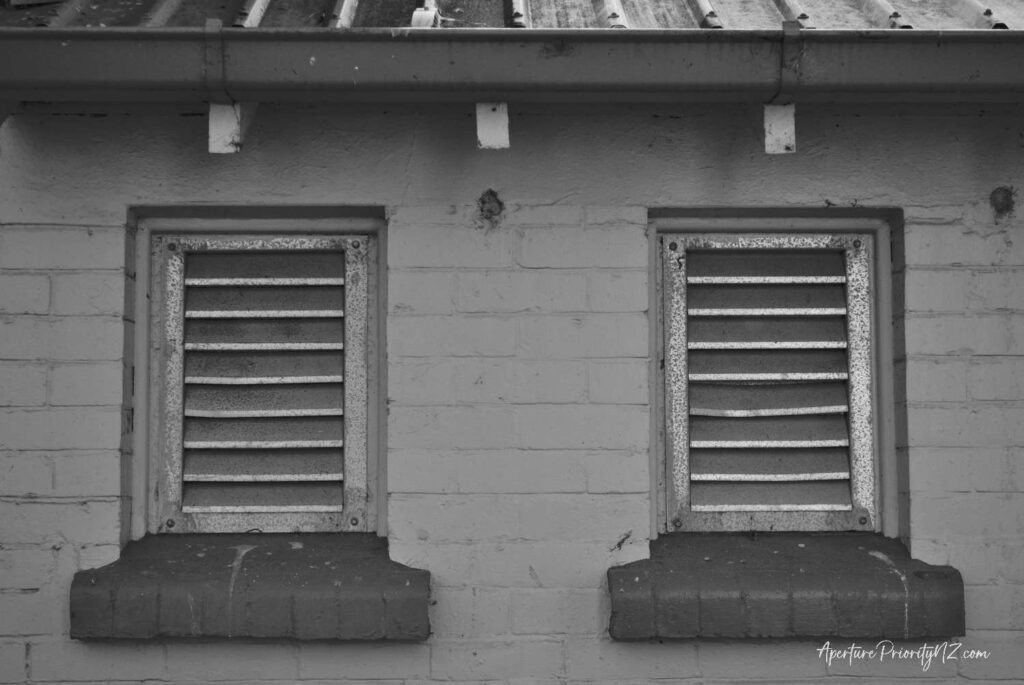
This is nothing more than a picture of two windows. Symmetry. Taken straight on. Flat lighting. Two other characteristics of the deadpan photography aesthetic.
I snapped it and moved on. Before I became non-objective about what I was looking at. That’s a key to deadpan photography. A guideline. Take just one photo of something that just is there, don’t think about it, don’t take another image from another angle or point of view. Move on to the next one.
That’s how I do it anyway.
( Heads up time – DxO has provided the software I use at no cost, and I am a DxO affiliate. So if you use the code RickH15 at the DxO store, you will receive 15% discount on any NEW DxO product purchase, and I will receive a small commission at no extra cost to you. You can try before you buy with DxO’s free trial offers.)
Now back to deadpan…
Here’s another example. Shoot it. Walk on.
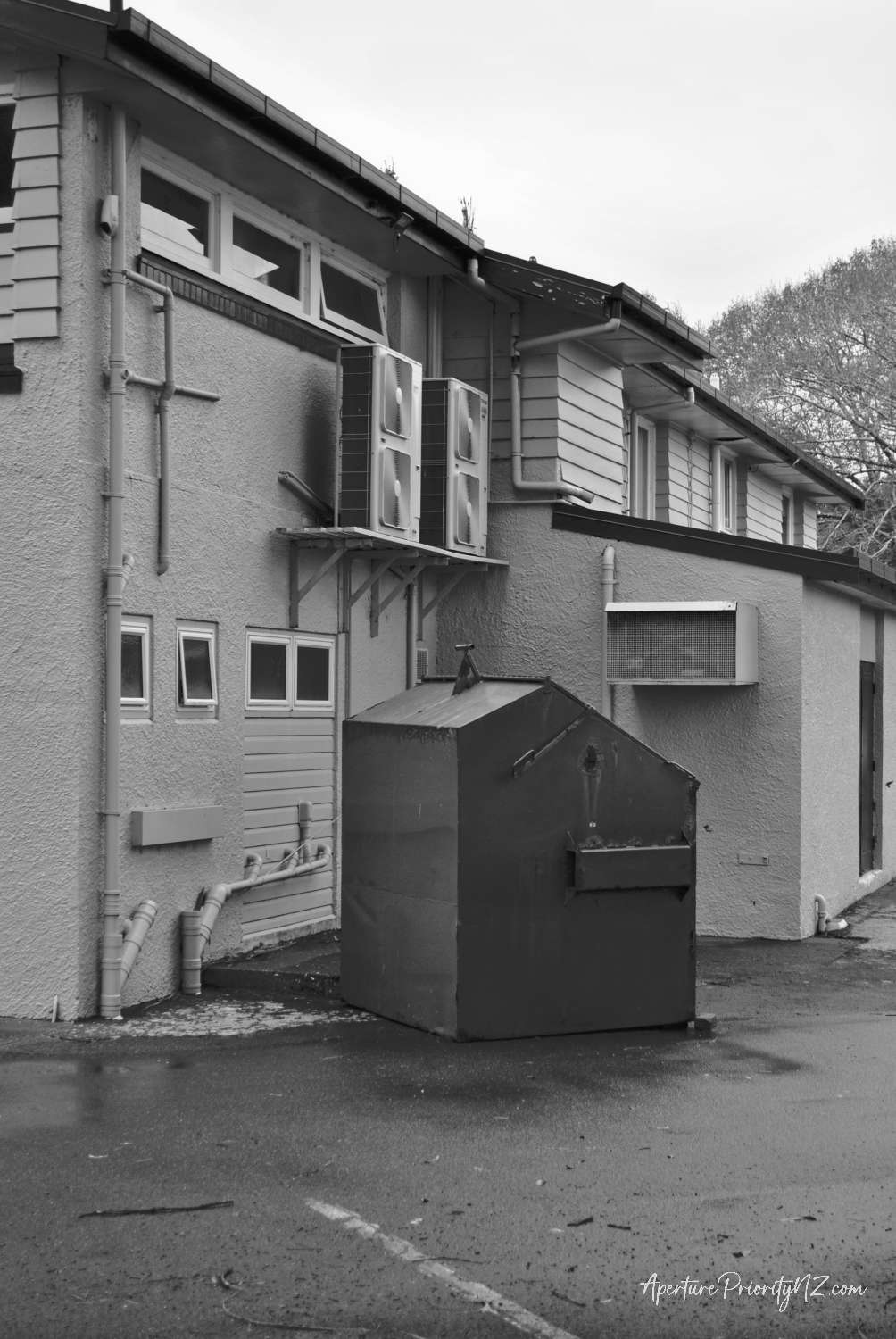
The deadpan photography aesthetic almost makes a statement. Nothing to see here. Well – nothing exciting anyway.
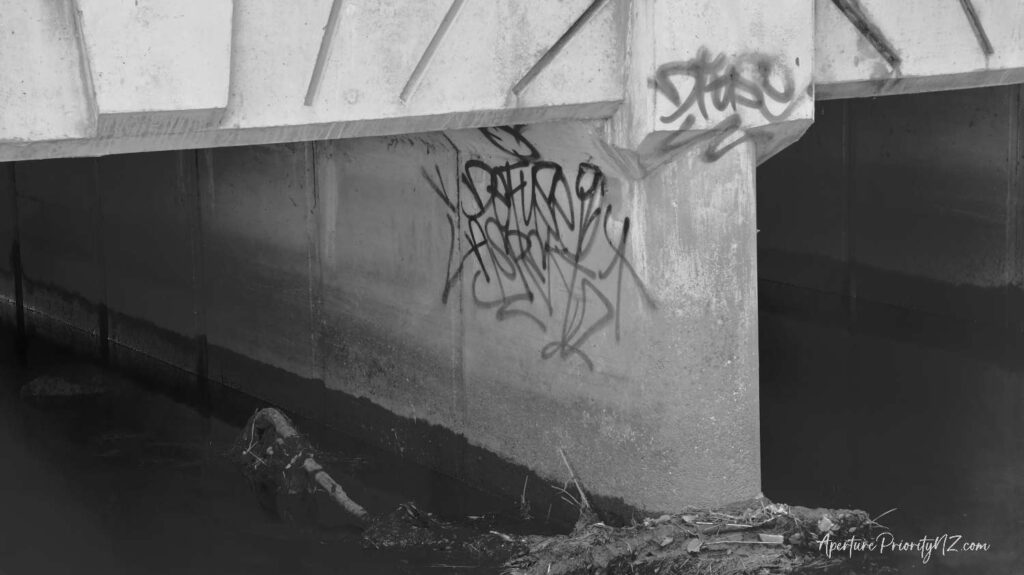
Deadpan photography is well suited to black and white. Dull light. Low contrast. Bugger all texture.
But colour can also be part of the deadpan photography aesthetic.
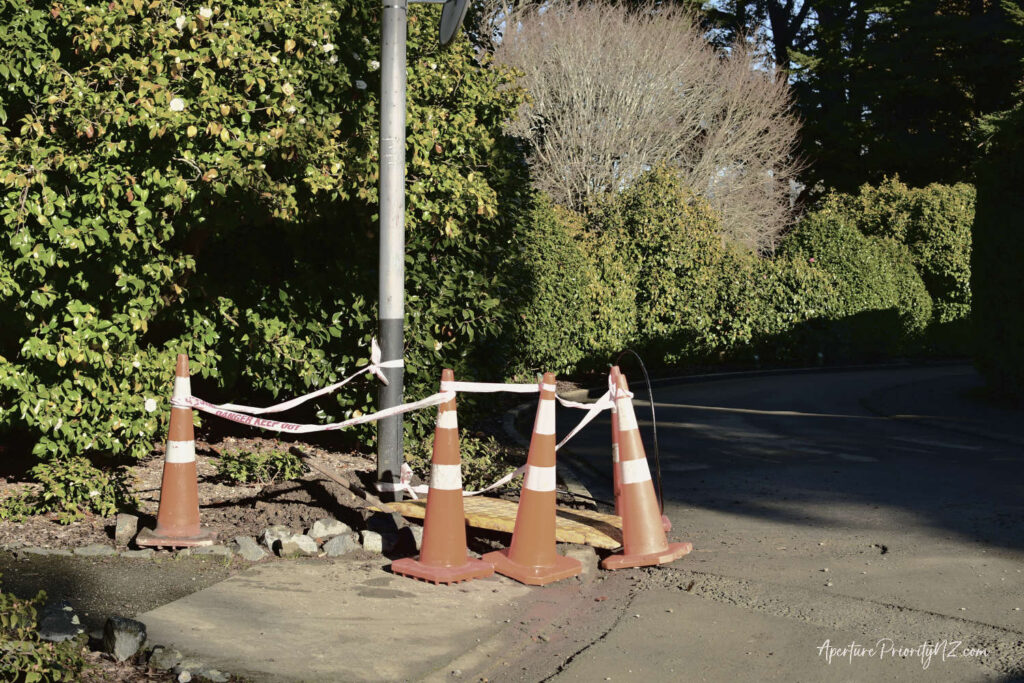
Generally, reduced saturation works for colour deadpan. Low vibrance. Nothing standing out. Boring stuff. Just more never-look-twice-at road cones.
Now I am going to suggest something outrageous. About one of the most famous, most expenssive deapand photographs ever!
Rhein II. By Andrea Gursky. Have a look and see what you think.
Yes – it absolutley fulfils all the characteristics of the deadpan photography aesthetic. Except one. Objectivity.
Gursky digitally removed a factory building. Cyclists. Dog walkers. All signs of human presence in the original scene. Gone.
That’s not being objective. Not taking the shot and walking on. It’s altered reality. Digital intervention. As in I don’t like what I see. I’m taking it out. And that. Aaah – that’s better! Deadpan art.
But – for $4.3 million I’d do exactly the same.
I guess deadpan photogrpahy challenges the norms of photography. Golden hour. Blue hour. Rule of thirds. Contrast. Shadows. Highlights Textures. All that stuff goes out the window.
But from my point of view deadpan photography is worth a try. It can be fun. It means you can get out on those dull-boring-nothng-to-see-here days and get some photographs. And the discipline of shooting just one image and moving on does actually make you stop and think. Makes me think anyway.
And it has got me back to shooting JPEGs only. For a short while.